Sometimes the hardest part isn’t the feeling — it’s not knowing where to put it.
(For moments when your nervous system wants reassurance — and you choose to offer it to yourself.)
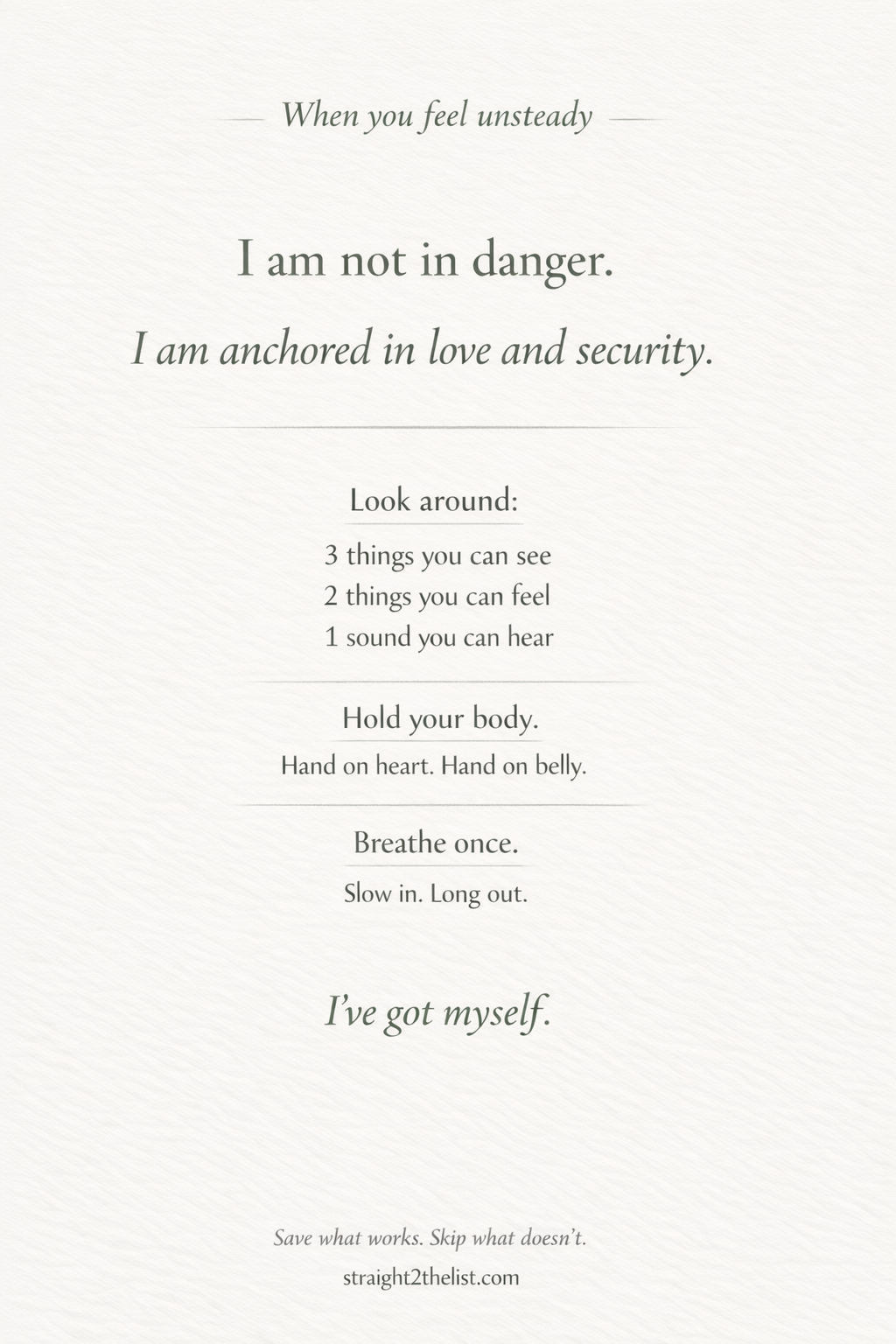
1. Orient to the present moment.
Quietly notice:
• 3 things you can see
• 2 things you can physically feel
• 1 sound you can hear
Let the room remind you where you are.
2. Hold your body.
Cross your arms over your chest, or place one hand on your heart and one on your belly.
Gentle pressure. No rubbing.
Let your body register: someone is here.
3. Name safety out loud.
Say it slowly:
I am not in danger.
Let the words land in your chest, not your thoughts.
4. Breathe into your belly.
One slow inhale that gently expands your lower hand.
One long exhale.
No forcing. Just space.
5. Contain instead of explain.
You don’t need to understand this feeling right now.
You don’t need the right words.
Holding comes before meaning.
6. Anchor yourself.
Say:
I am anchored in love and security.
Not because nothing hurts — but because you are held anyway.
7. Pause the story.
If your mind starts narrating motives, futures, or what this “means,”
gently say: Not now.
Return to your hands. Your breath. Your weight.
8. Let connection wait.
You don’t have to reach outward to steady yourself.
You can be with yourself first — and reach later from a calmer place.
9. Close the moment gently.
One more breath.
A soft release of your arms.
Say: I’ve got myself.
Save what works. Skip what doesn’t.
Author note:
I’m learning that steadiness doesn’t always come from answers — sometimes it comes from being held. This is one way I practice that.